

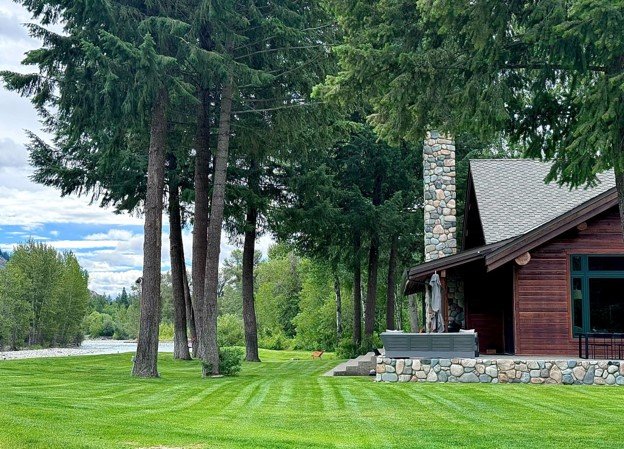
After 37+ years living in this valley, I’ve learned what Methow buyers actually pay attention to — and where sellers spend time and money that doesn’t translate into a faster sale or better price. Here are the five things that genuinely move the needle, and three that don’t.
What makes a Methow listing stand out
1. Real water — not just “creek frontage” on a plat map
Buyers here ask about water before they ask about square footage. Senior well rights, a permitted irrigation right, year-round flow on a creek, a properly-maintained shared well agreement — these all command real premium. The opposite is also true: a “domestic well exempt” parcel near a contested water-rights area can sit on the market.
What to do: Pull your well log, your most recent water quality test, and any water-rights documentation before listing. Make it part of the disclosure packet. Buyers (and their inspectors) will ask, and being ready signals you’ve cared for the property.
2. Defensible space that’s actually been maintained
Insurance is the biggest hidden constraint on Methow sales right now. Buyers are quietly losing deals because their insurer won’t quote — or quotes at a number that breaks the deal. A property with clean Zone 1 (0–5 ft), thinned Zone 2 (5–30 ft), and a maintained Zone 3 (30–100 ft) gets binders. One that hasn’t seen a chainsaw in a decade often doesn’t.
What to do: Get a free Firewise assessment from your local conservation district before listing. Spend the weekend (or hire help) to clear the gap between the house and the surrounding fuel. It costs less than the price reduction you’d otherwise take.
3. Genuine trail or access proximity
“5 minutes to Methow Trails” beats “near skiing.” “Walk out to Sun Mountain singletrack” beats “great hiking nearby.” Buyers shopping the Methow are usually shopping for a specific outdoor life. The more specifically and truthfully you can describe what’s at the property line, the better.
What to do: Walk the property edges with a map. List the exact trailheads, distances, and what’s accessible directly versus by car. Honest specifics outsell vague enthusiasm every time.
4. Good photography of the land, not just the house
Most listings have decent house photos. Few show the land in any meaningful way. A Methow property is bought as much for what’s outside as inside — the meadow at dusk, the larches in October, the view from the deck on a clear December morning.
What to do: Shoot the property in two seasons if you have time. Capture morning light, capture late light, capture the trail or river or mountain that gives the place its character. (Photography is what I trained in before real estate, and it’s part of what I bring to every listing.)
5. A clean, complete disclosure
Methow buyers — especially out-of-area buyers — fear the unknown more than they fear known issues. A septic that needs pumping every 3 years and was last pumped 18 months ago is a fact. A septic with no recent records is a question mark. Question marks lose deals.
What to do: Compile everything before listing: septic pump records, well info, road association meeting minutes and dues, fire mitigation history, recent improvements with permit numbers, any unresolved boundary or easement questions. Buyers reward sellers who do their homework.
What doesn’t move the needle (and where sellers waste money)
Expensive staging
City staging norms (rented furniture, abstract art, neutral throw pillows) don’t translate here. Methow buyers want to see a property as a home, not a hotel. Tidy, clean, and personal beats staged-to-impersonal every time. Spend the staging budget on a deep clean and exterior touch-ups instead.
Pricing high “to leave room for negotiation”
The Methow market is small and inventory-aware. Buyers and their agents know what’s been sitting. A property listed 10% above comparable sales doesn’t get negotiated down — it gets ignored until it has price reductions, which signal weakness. Price honest from day one.
Last-minute kitchen “updates”
A $20,000 cosmetic refresh rarely returns $20,000 in price. Methow buyers are often more interested in the systems (heating, water, septic, roof) than in countertops. If you have a five-figure budget pre-sale, put it toward documented system upgrades or defensible space, not granite.
What I tell every Methow seller before they list: the work that helps you sell is the work you should have been doing anyway — maintained defensible space, current well/septic records, honest knowledge of your boundaries and access. Spending three weekends on these will do more for your sale than any cosmetic upgrade.
If you’re considering a sale in the next 6–18 months, reach out. I’m happy to walk the property with you, no obligation, and we’ll talk about what to do now versus what to wait on.