

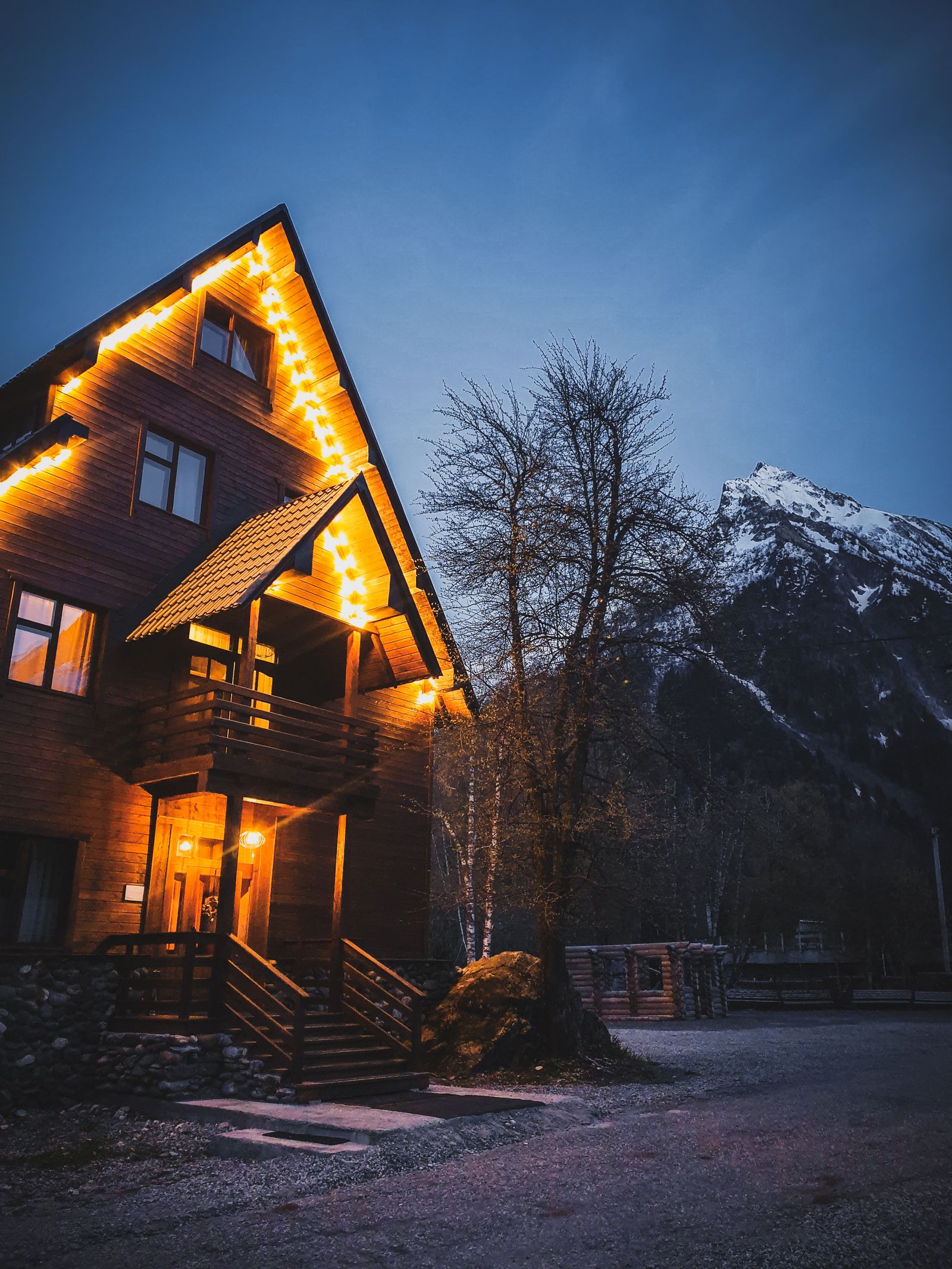
If you’ve been visiting the Methow Valley for years (renting cabins in Mazama, taking your family to Winthrop for Christmas week, riding the Chickadee trails in June) and this was the summer you finally started seriously looking at buying, the calendar is now working against you. Or for you. It depends entirely on what you decide in the next four to six weeks.
Second-home buying is different from primary-home buying in ways that matter enormously for how you should think about the decision, especially in a mountain-town market like the Methow. The urgency is emotional, not logistical. The financing is more complex. The property use case is fuzzier (“weekends? whole summers? eventual retirement?”). And the market dynamics reward buyers who commit in the fall in a way that isn’t as pronounced for primary buyers.
The framework I use with second-home shoppers who are on the fence at this time of year follows.
The “one more summer” trap
The most expensive mistake I see second-home buyers make is deciding to wait one more year to see if the perfect property comes along, or to see if the market softens, or to give themselves more time to plan.
The math almost never works in favor of waiting.
Appreciation compounds, though not evenly. The 10-year CAGR on Methow properties (2015 to 2025) has averaged in the mid-single-digits across most submarkets, but that average papers over big swings: 3 to 5% pre-2020, a 15 to 25% acceleration in 2020 to 2022, and a flatter or mixed 2023 to 2025 depending on submarket. What matters for the wait-or-buy decision isn’t the historical average. It’s that inventory is limited, replacement cost is rising with construction costs, and most Methow submarkets have shown positive year-over-year price movement in every recent multi-year window. On any specific property you are evaluating, the price next spring is likely to be at or above today’s number, not below it. Combine that with rate uncertainty and it’s rarely math that favors waiting.
Interest rate uncertainty. Rates in 2026 are volatile. Waiting for a lower rate has been the losing bet for most buyers since 2022. It might work out. It usually doesn’t.
Inventory doesn’t get better. In smaller communities like Mazama and Winthrop, the properties that check the boxes for a specific second-home buyer are rare. The lakefront property with the guest cabin, the ski-in Mazama place with the right layout, the acreage with views AND flat ground for a garden. When the right one appears, it appears rarely. Passing on a good-enough one to wait for a perfect one usually means waiting years.
Your window of use shrinks. Second-home buyers are usually buying for a specific life phase: kids at a certain age, career at a certain point, health at a certain level. Waiting a year is one less year of use. Waiting five years, on a decade-long life-stage window, is half the use.
Rental income compounds too. If you are planning to short-term-rent the property to offset costs, every year you wait is a year of forgone rental income (typically $25K to $55K gross for a well-run Methow STR; see the STR post for the full math).
None of this means “buy something you don’t love.” It means: the cost of deciding to buy this fall vs next spring is measurable, and it usually favors buying now.
What to lock in during shoulder season
Second-home buyers have specific due-diligence needs that a primary-home checklist doesn’t fully cover. Fall is a better window than summer to work through them:
Winter access. You probably visited the property in July. You have no idea what the road looks like in February. Ask the seller directly: is the driveway plowed? By whom? At what cost? Has the property ever been inaccessible for more than 24 hours in winter? Ask a neighbor. This one factor alone can convert a dream property into an expensive frustration for a second-home owner. (See the winter access post for the full framework.)
Off-grid or utility fragility. Second homes are often more remote than primary homes. Well pump on a shared circuit? Propane tank buried in three feet of snow when you visit in January? Frozen pipes during your November trip because the heat controller failed? These are second-home-specific failure modes. The fall walk-through is when you can actually see access to utilities without snow cover.
Broadband. If you are planning to remote-work occasionally from the property, or run STR guest communications from it, or just want to stream on weekends, verify current internet speeds at the property in person, not from a coverage map. Starlink has changed a lot of Methow properties from unusable to workable for remote work, but installation, obstruction, and monthly cost need to be confirmed.
Homeowners insurance. Second homes are harder to insure than primary residences in fire country. Some carriers won’t write policies for properties occupied less than 50% of the year. Some require security systems, wired smoke detectors, and specific defensible-space clearance. Get a quote in your name from your target carrier BEFORE removing contingencies, not after. See the wildfire prep piece.
Property management. Are you going to manage the property yourself, or hire someone? Full-service Methow property management runs $75 to $200/month for basic caretaking (checks after storms, mail, minor maintenance) up to 25 to 35% of gross for full STR management. Interview at least two managers before you close.
Vacation rental permits. If STR income is part of your model, verify the property is permitted (or can be permitted) for STR use in its jurisdiction. Winthrop has caps and a Conditional Use Permit requirement. Twisp is more permissive but tightening. Unincorporated Okanogan County is largely open. See the STR rules post.
The financial reality most second-home buyers underestimate
Second-home financing is meaningfully different from primary-home financing, and shoulder season is when you should be locking these details down:
Down payment. Since Fannie Mae’s 2022 LLPA (loan-level price adjustment) changes, most conventional second-home loans effectively require 15 to 25% down to get competitive pricing. 10% is technically available from a narrow set of portfolio lenders but comes with meaningful rate and fee premiums. 25% is the norm buyers should plan around; jumbo second-home programs often want 25 to 30%.
Interest rate and pricing premium. Beyond the base rate, Fannie Mae’s second-home LLPAs added roughly 1.125 to 3.375 points to loan pricing depending on LTV and credit. That translates to meaningfully higher effective rates than primary-home financing for the same borrower. Not devastating, but very real, and often larger than buyers expect from casual research.
Debt-to-income calculation. Lenders will include the new mortgage plus taxes, insurance, and HOA in your DTI, but usually will NOT count projected STR income toward income (Fannie Mae and Freddie Mac guidelines have exceptions; ask your lender specifically).
Property tax and insurance. For non-owner-occupied properties in Washington, some tax exemptions don’t apply. Insurance is meaningfully higher than primary (see wildfire piece).
Ongoing carrying costs. Property tax + insurance + utilities standby + minimum maintenance for a $700,000 Methow property typically runs $12,000 to $18,000/year excluding mortgage. If you are renting 20 to 30 weeks/year, most of that is offset. If you are not, it comes out of your pocket every year.
The 3-year rule of thumb. Second-home purchases should generally be made with the assumption you’ll own the property at least 5 to 7 years to justify transaction costs (purchase + eventual sale). If you are not sure you’ll want it that long, the financial math gets much harder.
October vs. April: what a six-month wait actually costs
Concretely, on a $750,000 Winthrop-area property, the six-month wait from October to April usually costs more than buyers realize. The categories:
- Price movement. Assume the property, or a comparable one, holds value or appreciates modestly. Even flat pricing means you buy the same asset having lost six months of use.
- Rate uncertainty. Waiting for a lower rate has not been the winning bet in recent years. It might work; it usually doesn’t.
- Rental income foregone. If you were planning to short-term-rent the property, the December-March ski season is the biggest STR revenue window in the Methow. Waiting to close in April misses it entirely.
- Redoing due diligence. If a fall deal died and you are re-shopping in spring, you pay for a second round of inspections, appraisals, and insurance quotes, usually $1,500 to $3,000.
- Specific-property risk. The property you loved in October is often under contract by April 15. If it wasn’t unique, the wait is fine. If it was, the wait may cost you the property entirely.
The exact dollar total depends on the property, the market, and the buyer’s use case. What’s consistent is that the buyers who wait usually end up spending more time and often more money to end up with a lesser property. In slower-appreciating markets or in a year of clear rate declines, the wait math might work. In the current Methow market, it usually doesn’t.
The permission-to-decide framework
Second-home buyers often need permission to make the decision they already know they want to make. If any of these are true, the framework says buy:
- You’ve toured 6+ properties over the last 12 to 24 months and you know your top choice.
- You have the down payment liquid or nearly so.
- Your primary residence is stable.
- Your income supports the payments even if the property produced zero rental income.
- You can articulate specifically what the property adds to your life for the next 5 to 7 years.
- You’ve done the due diligence work (or have someone doing it for you).
If instead most of these are true, the framework says wait and shore up first:
- You haven’t actually seen 5+ properties in person.
- The down payment is aspirational, not liquid.
- You need STR income to make the numbers work and haven’t validated that income.
- Your career or health situation is likely to change materially in the next 24 months.
- You are going to buy because a friend just did or because Instagram made the Methow look magical.
Neither of these lists is a hard rule. But most Methow second-home buyers I talk with land clearly on one side or the other.
What to do this week if you are leaning “yes”
If you’ve been thinking about it and you are closer to yes than no, three concrete actions before the end of September:
- Get a specific pre-approval letter with a dollar amount you are comfortable with, dated within 30 days.
- Revisit your top 2 to 3 properties in the fall light with a critical eye. This is the reality tour, not the romance tour.
- Get a written insurance quote for the specific property that’s your top choice.
With those three things in hand, you are ready to write when the moment comes. Without them, you are ready to think about writing, which is a different thing.
Buying a Methow Valley second home is one of the more emotionally significant real estate decisions a family can make. It’s also, in the current market, a decision that rewards fall commitment and punishes spring hesitation more than it did five years ago. The buyers who understand that dynamic are the ones ending up in the properties they wanted.
If you’ve been looking all summer and want to talk through the decision (the property, the financing, the family calculus), reach out. The buyers who commit during this fall window rarely regret it. The ones who wait until April often do.